


Facilities Financing And School Finances: Building The Foundation For Educational Innovation
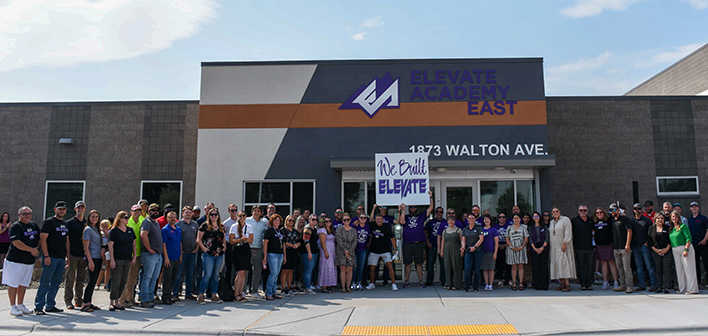
In the world of charter school development, one challenge looms larger than most: How to finance and build or renovate a suitable facility. For many charter schools across the country, this obstacle can mean the difference between thriving and merely surviving or, in some cases, not opening at all. Spending a disproportionate amount of a school budget on facilities can be a death knell. This is true in Idaho and across the country.
Bluum, in partnership with Building Hope and other facility financing partners, transformed this landscape in Idaho by creating what experts described as the most comprehensive charter school facilities financing ecosystem in the nation.
Representative Wendy Horman pointed to this work as a signature achievement. “The charter school facility, the credit enhancement plan that we have here in Idaho… has really revolutionized the way that charters are able to get facilities and pay for facilities,” Horman said. “They have that partnership with Building Hope. And we’ve leveraged the state’s credit in a way that is very, very low risk, but also allows more money at lower interest rates. It’s saved millions of dollars for charter schools to put into the classroom rather than into the facility.”
McClure said this financing innovation has attracted attention well beyond education. “The really creative, unique financing… starting schools with the revolving loan fund when they’re starting and then moving them to the credit enhancement when they’re more mature… has made a huge impact to the point where lots of people now are asking how we did it, and could they follow it and model it inside Idaho, not in education, and then outside Idaho for other charter schools and states.”
“The charter school facility, the credit enhancement plan that we have here in Idaho... has really revolutionized the way that charters are able to get facilities and pay for facilities.”
Over the past decade, this impact has been visible across the state, where new charter schools consistently opened in purpose-built facilities rather than makeshift space, in stark contrast to the pattern in most states where charters typically start in strip malls or retrofitted buildings.
Wes Olson, a Managing Director with Raymond James who worked on nearly 20 Idaho charter school financings since 2020, called Idaho “the best charter school facility financing landscape in the country. No question. Bluum has played a big role in developing the most efficient startup financing mechanisms available. That can be the difference between the school opening or not, especially since interest rates have come up since 2022.”
Creating a financial ecosystem
The foundation of this financing ecosystem rested on multiple complementary programs that Bluum helped develop and implement with key partners.
According to Matthew Joseph, Senior Policy Advisor at ExcelinEd, most states had either long-term financing solutions or startup solutions, but rarely both. “Idaho is unique… they have crafted policies that combine those two stages,” Joseph said.
This dual-stage approach began with a revolving loan fund for startup schools and transitioned to a moral obligation (aka credit enhancement) bond program for established schools. The revolving loan fund provided low or no-interest financing during a school’s vulnerable early years, while the moral obligation program enabled established schools to secure long-term bonds at advantageous rates once they’d built a track record.
“In other states, if we finance a startup, you can expect to pay six to 10 percent, depending on the market,” Olson said. “With the tools that they’ve put in place in Idaho – the revolving loan fund, the subordinate debt from Building Hope that’s funded in partnership with JKAF – we are getting financings done even in this environment at a blended 3 to 4 percent interest rate.”
Joe Bruno, founding head of Building Hope and now a Bluum board member, said JKAF committed $35 million over time to establish a revolving financing fund, managed by Building Hope. “Our program would be to just calculate what it would take for a school to get to the level of enrollment to be able to go out and get their own financing,” Bruno said. “Once a school pays back the revolving fund, once they get external financing, we can recycle the money.”

Beyond traditional financing
What made Idaho’s approach particularly effective was how it integrated multiple funding streams to reduce costs at each stage of development.
The moral obligation enhancement program, modeled after similar programs in Colorado and other states, allowed the state to back charter school bonds, lowering interest rates without significant risk to taxpayers. The state essentially guaranteed repayment if a school defaulted, which reduced perceived risk for investors.
“There tends to be a kind of market failure with charters, that the market is treating something as riskier than it really is because of their lack of familiarity with it,” Joseph said. “What states like Idaho are doing is saying, ‘OK, you go to the bond market, and if there’s a default, we’ll guarantee the bond.’ Those investors feel much more confident. They’ll lower their interest rate by a huge amount, even a couple of percentage points.”
This rate reduction could save a school hundreds of thousands of dollars annually, money that stays in classrooms rather than going to debt service.
But Idaho’s charter school financing model, crafted initially by Building Hope and over time modified in partnership with Bluum, extended beyond just government-backed programs. The effort assembled a comprehensive network of partners, including JKAF, Building Hope, the Charter School Growth Fund, and traditional lenders, creating a financing stack that dramatically reduced costs for new schools.
“Charter School Growth Fund’s involvement is unbelievable,” Olson said. “We’re doing two deals right now where Charter School Growth Fund is a senior lender at startup, and they have a product that is 0% during construction and 1% after.”
Marcia Aaron of the Charter School Growth Fund described her organization’s role on facilities financing in Idaho as “helping charter bridge the gap to when they can then do the long-term takeout.”
The human element
Behind the complex financial mechanisms are key individuals who make the system work. Bluum’s team, particularly CFO Marc Carignan, received extensive praise from financial partners.
“Marc is just the right guy, and he’s dedicated,” Bruno said. “He’s the best professional that I know that understands charter schools in all aspects when it comes to financials of anybody I’ve met.”
This financial expertise was complemented by Bluum’s fellowship program, which developed school leaders years before their schools opened. This development pipeline created stronger school models, which in turn reduced financial risk.
“It’s not just the financing, it’s the quality of facilities that they can have year one,” Olson said. “It drums up community support. It expands their impact on their communities with higher enrollment levels.”
The Impact: More resources in classrooms
The real value of this financing ecosystem isn’t just in brick-and-mortar buildings; it’s also in the educational resources these financial savings make possible.
“The money schools would have been paying for facilities would have had to be taken from their operating budgets,” Joseph said. “Not having to do that meant they were able to provide more teachers, or services like in an IB program, or at Elevate Academy where they’re serving 100 percent at-risk kids with a CTE model, they need equipment that they couldn’t afford otherwise.”
Most remarkably, this is happening in a state that in 2024 maintained the lowest per-pupil expenditure in the nation, ranking 51st when including the District of Columbia. Every dollar saved on facilities was a dollar that could support teachers, curriculum, and student services.
The real value of this financing ecosystem isn’t just in brick-and-mortar buildings; it’s also in the educational resources these financial savings make possible.
Challenges and the path forward
Despite its successes, Bluum’s facilities financing model faces ongoing challenges. Rising construction costs and interest rates constantly drive-up costs, potentially straining even this efficient system. “It’s like whack-a-mole,” said Ryan. “We solve one set of problems and others just take their place.”
“The cost to build schools, has gone up dramatically, and the cost to finance schools has gone up because interest rates have gone up 300 to 400 basis points,” said Toby Prehn, Bluum’s board chair.
Real estate availability also presents a bottleneck. “If there would be a way to identify and buy properties in advance,” Olson said, that might help address delays in school openings caused by real estate issues.
Bruno pointed to another area for potential improvement: “I think we could probably do more in rural communities,” he said.
As Bluum looks toward its next decade, maintaining and expanding this financing ecosystem will be crucial to sustaining its impact. But the foundation it has worked to build, combining innovative financing tools, strong partnerships, and dedicated expertise, offers a model that many charter school leaders across the country look at with envy.
“I wish I could create Bluum and put them in every state that we work in,” Olson said. “I wish we could have a national Bluum.”

